Cuore ® MD ECO Systems
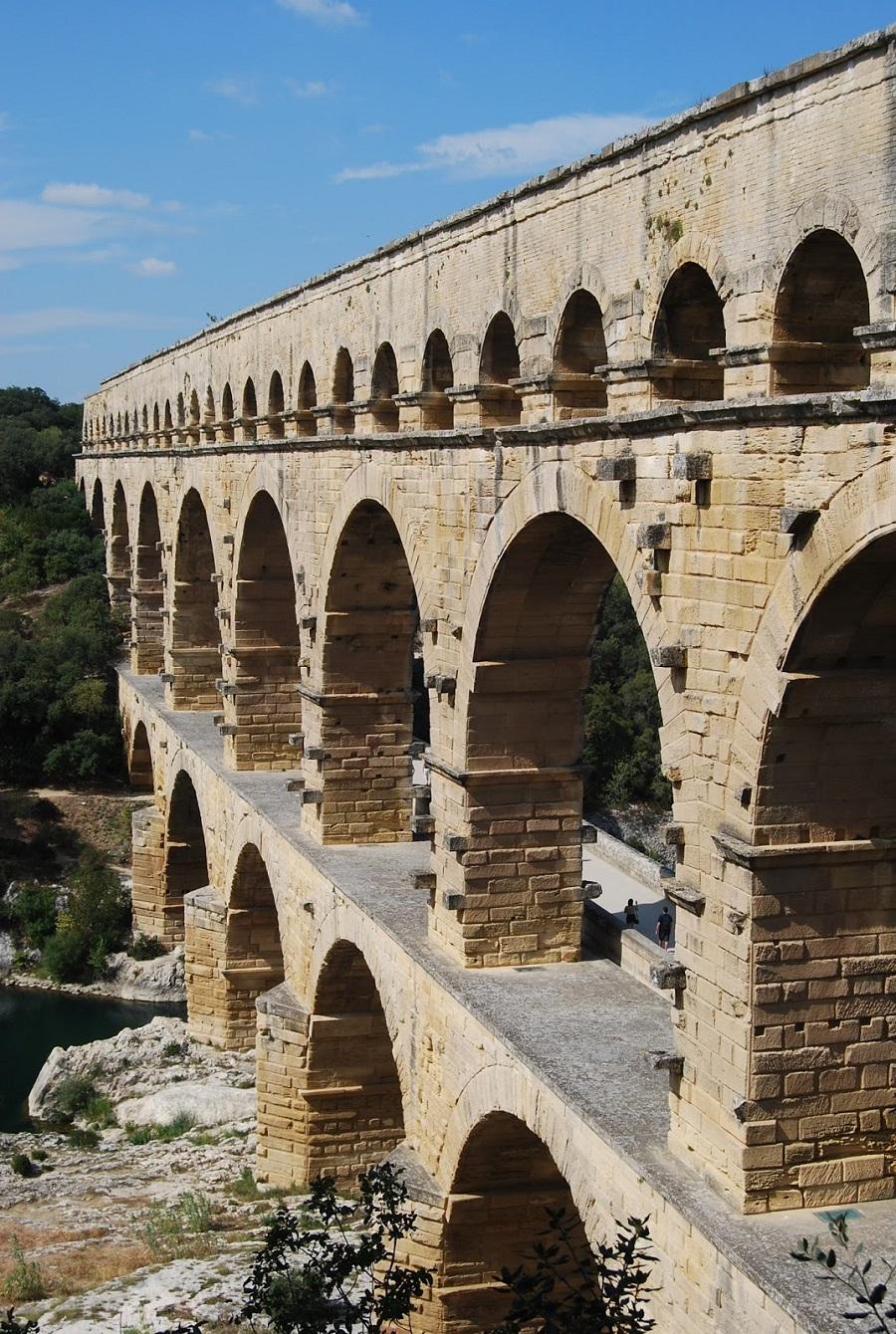
Two thousand years ago the Romans laid the foundations for creating ecological concrete.
Many of these works still stand today. After the fall of the Roman Empire, further development came to a standstill.
With the invention of Portland cement around 1824, cement came back into use as a building material. Over the years, cement consumption in the construction sector has risen steadily.
Unfortunately, Portland cement is not an ecological material. The process releases high concentrations of CO2: 800-1100 kg of CO2 per tonne of cement produced.
Since global cement production is expected to rise to between 4.4 and 7 million tonnes a year by 2050, it is high time the construction sector as a whole took responsibility and looked for sustainable, innovative and more ecological solutions.
The thinking behind our product is to mix a product made of industrial residues with heavily reduced CO2 emissions as an alternative to environmentally damaging Portland cement. The CO2 emitted during the production of Portland cement comes from a combination of the fuel used and the CO2 released from the limestone needed to produce cement . Around 50% of the CO2 is emitted when lime is calcined at a temperature of 1500°C during this process.
The Romans devised a form of cement based on a pozzolanic binder, a binder from Mount Vesuvius. By using larger quantities of natural and artificial pozzolans instead of limestone, we can greatly reduce CO2 emissions, since no calcination is involved.
Pozzolans are also known as Roman cement. The Romans used only natural pozzolans, and pozzolanic cement can be found in famous Roman buildings: the Colosseum, the Pantheon, the Roman Forum, …
Put simply, cement is a powder (binder) with hydraulic properties which, mixed with water (hardener), forms a cement paste (binder/glue). This binds sand and stone together into a hard material (concrete). To this day, cement is the most important constituent of concrete.
After water, concrete is the most widely used material in the world. Around 17 billion tonnes are used worldwide.
Traditional Portland cement contains around 90% cement clinker, consisting of limestone, sand, clay and iron-bearing material, which is burned, ground and mixed with gypsum and possibly other additions.
The greatest CO2 polluter in cement production lies in the production of cement clinker, and more particularly in the calcination process, in which carbon dioxide is released from lime when it is heated to about 1500°C.

With our product we want to break with traditional cement production. Natural and artificial pozzolans can replace the large quantities of limestone, and make up the greater part of the cement, binding and hydrating in the same way as limestone. The great advantage of pozzolans is that they do not have to be burned; they already exist as residual products with a particle size like cement, or they can be ground and dry-mixed. By making maximum use of natural and artificial pozzolans, the use of Portland cement can be minimised, considerably reducing CO2 emissions.
Today, people produce enormous quantities of waste in the form of residual products from coal-fired power stations, the production of iron and ferrosilicon, rice husk ash, and so on.
These are artificial pozzolans and they are found in extreme quantities all over the world. They can be used in cement production in the same way as natural pozzolans. The chemistry and quality of the cement usually have to be monitored more closely, however, because alternative raw materials such as artificial pozzolans can have a greater influence on the properties of the finished cement than purely natural materials.
Natural pozzolans: lava, pumice, other volcanic substances, diatomite
Artificial pozzolans: fly ash, microsilica, blast furnace slag, other industrial waste.

Properties: recycling of waste material, up to 90% less CO2 emissions, longer life cycle, high strength, calcination process eliminated, minimal shrinkage, chemical resistance, high compaction. Maximum use of residual products, suitable for fibre reinforcement, good workability, low permeability, low temperature development. Supplied as a dry powder.
Did you know:
Reducing CO2 by 1 tonne is equivalent to:
*approx. 540 m², or the volume of a room measuring 8 x 8 x 8.4 m
*the amount of CO2 one tree absorbs in its lifetime, or the amount 33 trees absorb in one year
*the energy used to ride 250,000 km on an electric bicycle = 6.25 times around the earth
*production of approx. 72 kg of beef
*5,555 km flown within the EU
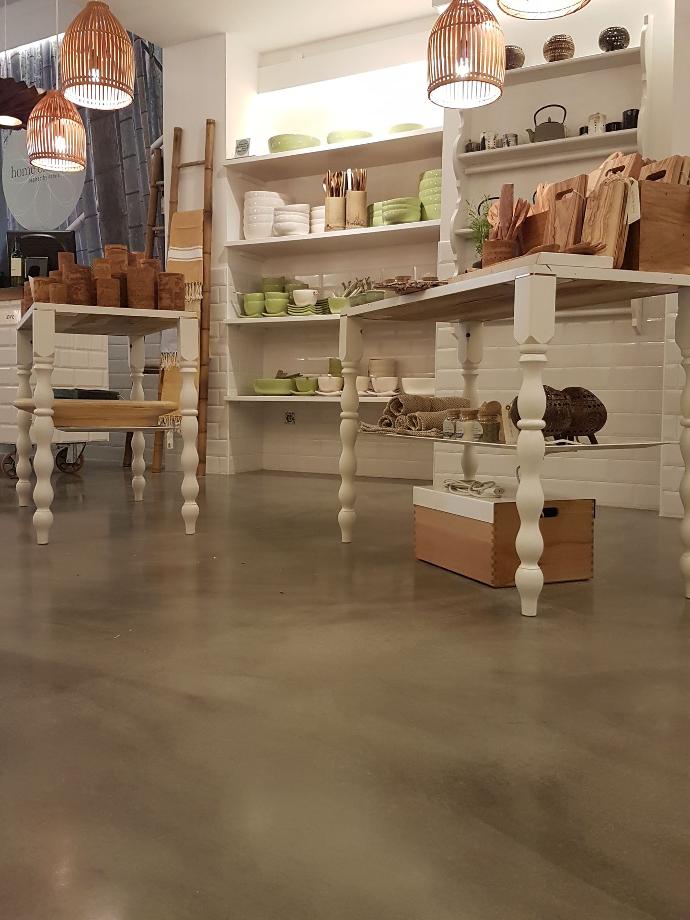
Cuore® MD ECO SL
Cuore® MD ECO SL
This system is applied seamlessly and feels soft and warm underfoot. The floor system has a low-maintenance, matt, smooth surface finish.
The system has a thickness that can vary between 2 and 3 mm, depending on the substrate and the preparation required.